HOME • ASSISTED PUBLISHING • JOIN MAILING LIST
______________________________________
NEW FROM FEARLESS ASSISTED PUBLISHING:
“A refreshing wake up call that many of us need.... You will feel that Dr. Cudahy is personally talking to you and your situation by providing a no-nonsense reality check.” — Evan Perez MD, Sports Medicine at University of Texas Health
Exercise isn’t optional.
It’s what the doctor orders.And it’s the most powerful prescription your doctor can offer — one that prevents disease, rewires your metabolism, strengthens your mind, and protects your longevity.
In TRAIN RIGHT: Doctor’s Orders for Healthy Fitness, sports medicine physician Dr. Ryan Cudahy cuts through the noise of fitness myths and quick fixes to reveal what actually works. With clarity, humor, and clinical precision, he breaks down everything from VO₂Max and strength training to cholesterol, hydration, sleep, and injury recovery.
You’ll discover how small, intentional changes create amazing results — and why movement is the closest thing we have to a real-life fountain of youth. Whether you’re a complete beginner, a lifelong athlete, or someone finally ready to make a change, this book gives you a trustworthy, science-backed path to living longer, stronger, and happier. Stop guessing. Start training right. _______________________
Published by Cudahy Books in collaboration with Fearless Literary
Paperback • ISBN 979-8-994754-0-9 • 260 pages • $19.95 • ebook $9.95




__________________________________________________________
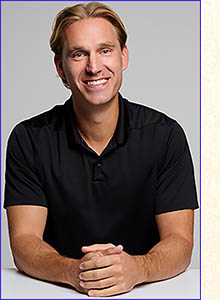
RYAN CUDAHY, MD is a board-certified sports medicine physician with extensive experience treating athletes and everyday patients seeking stronger, healthier lives. He has served as a team physician for professional and collegiate sports organizations and has guided thousands of individuals through evidence-based approaches to fitness, nutrition, and longevity.
Known for his clear, engaging explanations of complex medical science, Dr. Cudahy blends clinical expertise with relatable storytelling to make health training accessible and inspiring.
____________________________________
I N T R O D U C T I O N
(excerpted)
I grew up before cell phones and smart watches. In fact, most 90s kids didn’t even have watches — unless you were one of the chosen few with a Casio calculator watch, which instantly made you part of an elite squad of nerdy time-lords who could not only tell the time, but also divide 342 by 6 in under a second. The rest of us? We were raw. We were analog. We were free-range children. If we wanted to time ourselves on a run around the neighborhood, we’d use the oven or microwave clock as our official Olympic timing system. No GPS, no fancy Strava splits — just a one-minute head start and a frantic sprint back to the kitchen before the timer hit the next big number. It was the original HIIT workout: High-Intensity Interval Toasting. You either ran an 8- or 9-minute mile based on when you got back. And if it was 8 and a half? Tough luck— our tracking system didn’t recognize fractions. The in-between was anybody’s best guess.
Eventually, in middle and high school track, we were blessed with a small, sacred collection of stopwatches, guarded by coaches like they were Olympic medals. We’d awkwardly pass them between laps, hoping not to fumble the split timing and get yelled at for clicking too late. None of this real-time heart-rate variability stuff or hydration tracking. If you were thirsty, you drank from the garden hose. If you felt tired, your coach told you to run it off.
And if you puked during practice? Congrats. That meant you were finally trying hard enough....
Yet even without all of the accessibility, the information, the health standards, the next gen equipment, the coaching, or the instant feedback... we were more fit, and it’s not even close. We live in a world that tracks everything — our steps, sleep, stress levels, and even whether we’re “primed to train” or need to “focus on recovery.” Our shoes have carbon plates. Our watches talk to our fridges. Our toilets can probably analyze creatine levels (just give it time). And still — despite all the knowledge, gadgets, and high-def mirror workouts — we’re falling apart. By all measurable physical standards, society as a whole continues to falter and unfortunately the trend towards obesity and metabolic syndromes like diabetes and high cholesterol is getting younger and younger. Kids these days are the most obese they have ever been, to the point where this trend seems unstoppable. Even after Michelle Obama, while in office, called pediatric obesity America’s biggest crisis back in 2010, the trend not only continued but picked up a notch!
But all of this extra stuff can’t be bad; right?! All of this extra knowledge and feedback about our fitness isn’t the source of the polarization currently happening between the fit and unfit in our general population today; is it?!
Well, we know that records continue to be broken. The elite of the elite are getting even more… elite. The fastest humans on Earth, the strongest, the most versatile, the most athletic, or most agile are probably being born in this generation. D1 athletes are stronger, faster, and breaking more records on an annual basis than ever before. There are Olympic records set every two years, without fail. Humans can do new tricks, higher jumps, longer races, and even eat more hot dogs at a rate the world has never seen. Part of this must be attributed to the advanced tactics we now employ in training and the specific feedback we are able to obtain about our bodies.
So why isn’t the general population keeping up? Why do obesity rates continue to hike? The answer, unfortunately, is quite simple. It’s easy and cheap. Because beneath the avalanche of advancements, the fundamental truth remains: being healthy is hard. It’s easier and costs less to eat poorly and avoid physical activity, at least up front. What most people do not realize however, typically until it is too late, is that the physical toll and health-related issues of obesity will far outweigh (pun intended) this easy way of living.
And now that the world is making it easier than ever to do absolutely nothing, the consequences of that convenience are becoming painfully clear — literally. So grab your protein shake, turn off your smart notifications, and let’s dive into a no-BS look at how we got here, and what we can do about it. Spoiler: It might involve doing some weight lifting.
Why now?
And that, my friends, is exactly why the timing of this book — finished here in the wild year of 2025 — could not be more critical. We are barreling toward a real-life dystopia, and not the cool kind with leather jackets and robot sidekicks. No, I’m talking about the squishy, slowly-melting-on-the-couch version, where everything is done for us and the most physically demanding part of your day is yelling at your smart fridge for reordering oat milk without permission.If you’ve ever seen Disney’s WALL-E (and if you haven’t, pause here and go watch it — it’s equal parts adorable and terrifying), you’ll remember that eerily cute, trash-compacting robot cleaning up a deserted Earth, abandoned due to an “ecocide” — a cocktail of consumerism, corporate gluttony, and environmental neglect. Meanwhile, humanity floats around in space on luxury cruise ships, sipping sodas through straws while lounging in motorized La-Z-Boys. At the time, back in 2008, this seemed like sci-fi satire. Now? It’s basically next Tuesday.
We’re not far off from hover chairs and fully voice-operated existence. Our toilets are smart, our doorbells talk back, our cars drive themselves, and our delivery services can drop off dinner, dental floss, and dumbbells without us ever putting on pants. Meanwhile, the world’s brightest engineers are laser-focused on solving “problems” like how to get you from bed to couch with even fewer steps — because apparently 12 steps a day is asking too much.
Rather than addressing the actual problem — that we’re consuming more calories than a bear preparing for hibernation while moving less than a cat on a windowsill — we’ve built an entire global economy around treating the symptoms of a sedentary life. Our modern medicine cabinet is packed to the brim with treatments for conditions that, in many cases, could be drastically improved with some combination of broccoli, sweat, and slightly better life choices.
I often joke with my patients (except I’m not really joking): “I’ve got something for that… but so do you.” The prescription pad is handy, sure — but so is a pair of sneakers. And look, I get it. Taking a pill is easier. People today would even argue injecting themselves weekly with Ozempic is easier. It’s way more convenient to gulp down a tiny tablet than to rearrange your schedule and log 150 sweaty minutes at the gym each week. But what most people don’t realize — until it’s far too late — is the compound interest on those easy decisions. Yes, it’s cheaper and simpler now to let your health slide, but you’re racking up debt that your future body will absolutely collect....
The average person today might live into their 80s or 90s, but for many, the body checks out around 50. The rest is just managing pain, battling arthritis, and being trapped in a body that can no longer do what the mind still wants. Attia calls exercise “the most potent longevity tactic,” and he’s not wrong. It’s the single most powerful tool we have to stretch our healthspan — to make sure that those bonus decades we’ve earned aren’t spent watching life from the sidelines.
That’s what this book is about. Not six-pack abs or squat PRs — though hey, those are cool and we can help with that as well— but about reclaiming control over our bodies, our health, and ultimately, our futures. Because whether you’re sprinting through your neighborhood using the oven clock as a stopwatch or lifting dumbbells in your living room while a tablet yells encouragement, movement still matters. More than ever.
Now, before we dive any deeper, let’s talk about something that tends to make people squirm: pain. I know — it’s not sexy, it’s not glamorous, and it certainly doesn’t look good on Instagram. But here’s the truth: pain is part of the deal. It’s baked into the human operating system like pop-up ads in the early internet. You can’t delete it — but you can learn to work with it. I tell my patients this all the time: You’re going to hurt either way. The question is, do you want the good kind or the bad kind? Muscles are literally designed with pain-sensing fibers, like tiny bio logical alarm bells that go off when something changes — when you’re growing, stretching, working, or (let’s be honest) overdoing it just a little at 5 a.m. bootcamp.
That sore, stiff feeling after a tough workout? That’s your body saying, “Hey, nice job! We’re adapting.” It’s the biologic pain of progress — the result of microtears, fatigue, and good old-fashioned effort. It’s also the only way to actually downregulate those pain signals naturally, without reaching for a bottle of ibuprofen or a doctor’s prescription pad. This is why lifters, gym rats, and your one annoyingly enthusiastic co-worker keep saying things like “love the burn” or “no pain, no gain” like it’s a sacred mantra. Because to a certain extent... it is.
But here’s the twist. If you don’t feel that kind of discomfort regularly — if you avoid movement, dodge workouts, and keep swiping past your gym’s passive-aggressive Instagram reminders — then those pain-sensing fibers can actually become more sensitive, not less. That’s when we start seeing conditions like Fibromyalgia or Complex Regional Pain Syndrome, where people are in real, persistent pain... without any obvious injury. Scans come back clean. Labs look perfect. But the pain is constant — and very, very real.
And do you know what the #1 treatment is for these chronic pain syndromes? Yep. Exercise. Not because it’s trendy, but because it’s scientifically sound. The body craves movement. It’s built for it. Muscles want to be used. Otherwise, they throw temper tantrums in the form of pain. So here it is, plain and simple: Your muscles are going to hurt — either on your terms, or theirs. You can choose to feel the soreness after a satisfying workout, or feel the ache of neglect catching up to you in the form of chronic pain and dysfunction. But there is no third option. No cheat code. No “easy mode” where you float through life pain-free without ever moving a muscle (unless, of course, you’re planning to star in the sequel to WALL-E)....
Why this book?
The ultimate goal of this book is simple: to be applicable and useful to everyone. Whether you’re just getting started on your health and fitness journey, picking up your first book in this space, or reading your hundredth in a lifelong pursuit of improvement, I promise you’ll find something here. You’ll get wellness insights, insider knowledge, and practical actionable tips for every level — from the beginner unsure how to start, to the elite athlete fine-tuning their edge. From young adults laying a foundation for life to older readers reclaiming autonomy and vitality, from those bat-tling obesity to high-performing professionals looking to avoid burnout — this book is for you.In fact, the seed for this project wasn’t planted in a boardroom or a lecture hall, but in hundreds of repetitive conversations with real patients — conversations that began back in my residency and have continued ever since. My medical assistants and colleagues could probably recite many of these “spiels” word for word: cholesterol, blood pressure, diabetes, weight loss, obesity, low back pain, ITB syndrome, trapezius strain… You name it, I’ve said it — countless times. These are conditions that millions of people struggle with every day, and that show up constantly in clinics like mine across the country.
Low back pain alone remains one of the top reasons for visiting a primary care doctor or urgent care in the United States. There’s a very specific diagnostic and treatment algorithm I use with patients, which we’ll dive into later in the book — and just that alone might save you hundreds or thousands in future medical visits. One of the most rewarding outcomes of this writing is finally having a place to send patients for deeper answers — to go beyond the time-limited clinic appointment and arm them with long-term strategies.
This book includes hard realities. Because the world doesn’t need more sugar. It needs clarity. It needs truth. And it needs action. I want to shine a light on where the health and fitness industry tends to overpromise, oversimplify, or mislead, while also offering real hope and effective tools for anyone willing to do the work.
So many self-help books today want to reassure you that everything is fine, that your best life is just a vision board and a few positive affirmations away. But that’s not how real health works. That’s not how fitness is built. That’s not how disease is reversed or performance optimized. In contrast, ancient cultures believed sacrifice was sacred — a trade of effort for reward, discipline for transformation. I’m not asking for your life, but I am asking for sacrifice — and in return, you’ll earn a better one....
Because if it’s not already obvious by now — this is my passion. This is what I love. I’ve given my life to primary care and sports medicine, not just to treat illness or injury but to guide people toward lives they never thought they could have. I see patients every day who want nothing to do with physical fitness. I also work with professional and Division I athletes who push themselves to the edge of what’s physically possible. And I see everything in between.
So yes — this book has something for you. Because this book has something for everyone. And I truly believe the world needs to change course — and fast — if we want to offer our children and grandchildren any shot at a healthy, capable, pain-free life.
So… Shall we begin?
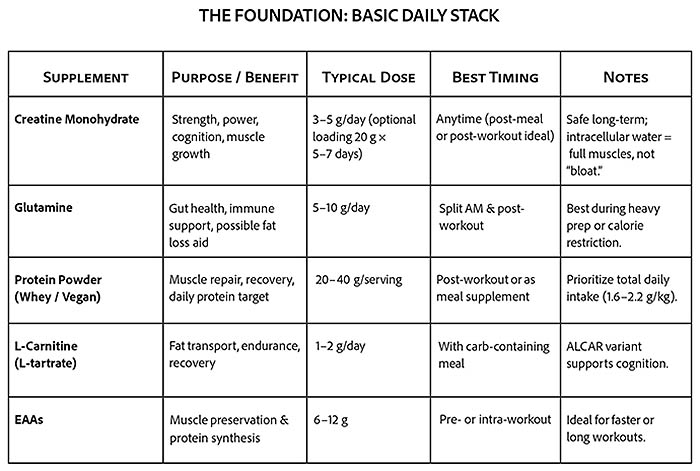
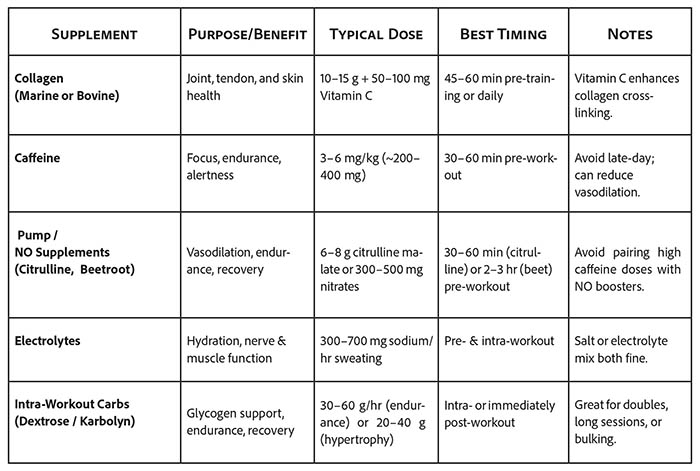
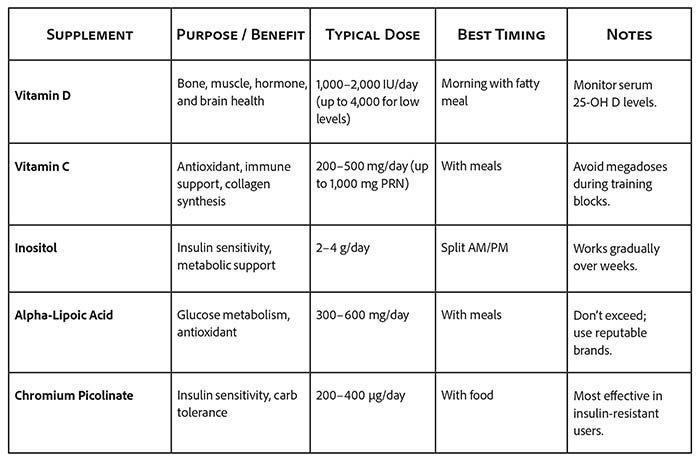
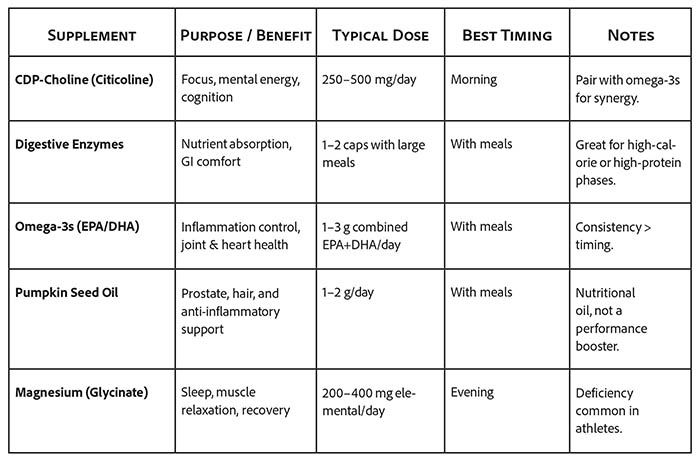
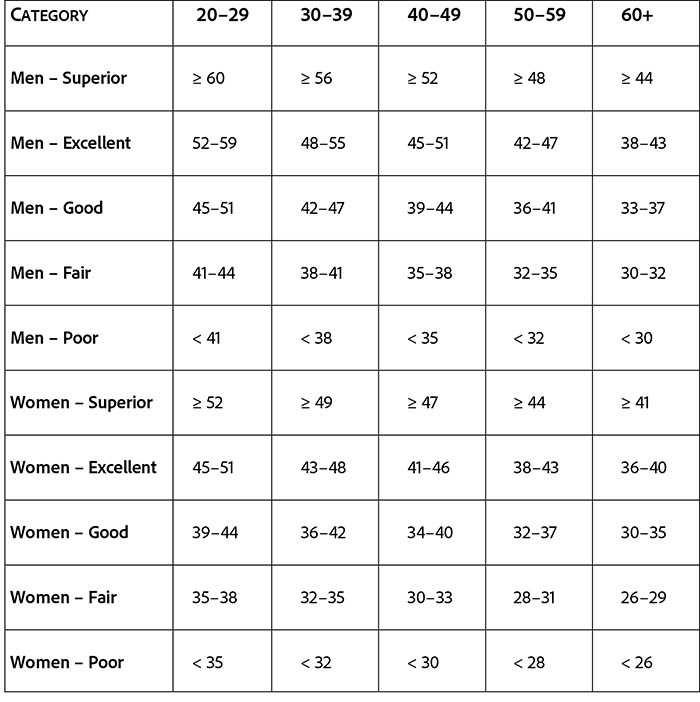
The following charts are linked from the ebook edition of TRAIN RIGHT.
They also appear in the print edition.
V02 Table